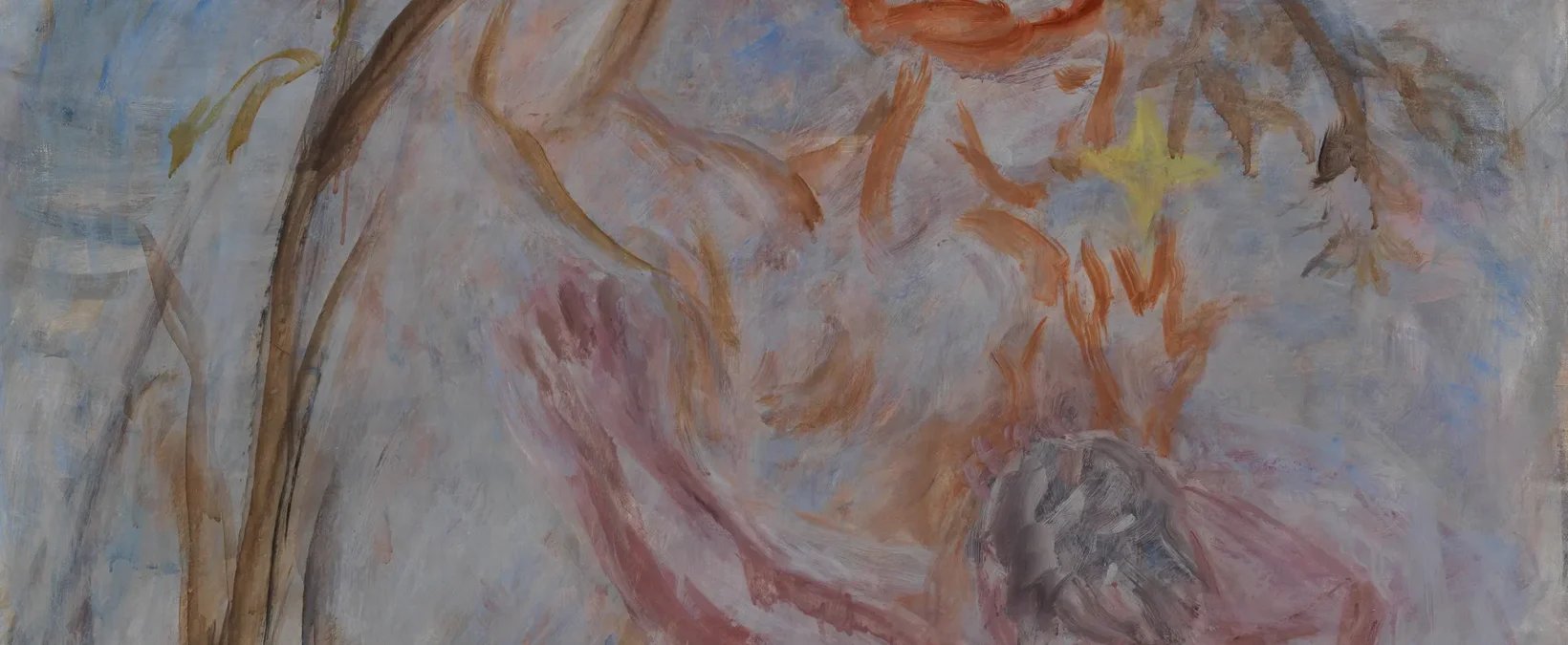
Approaching Religion 15/2 on the Witching of Art History. How to Approach Women, Art and Esotericism
The new issue of Approaching Religion, ‘The Witching of Art History’ examines how women and artists beyond gender binaries have navigated artistic and occult subjectivities, identities, and agency within art and occulture since the 19th century. The articles illuminate the mechanisms, structures, and discursive distinctions that have shaped the experiences of artist women, as well as the strategies they have employed to negotiate these challenges. The issue foregrounds the significant contributions of artist women not only within the art world but also across diverse spheres of occulture. It also introduces new conceptual frameworks for the study of art and esotericism—such as feminist ecoaesthetics, magical futurist art, and seeker as weaver—alongside perspectives that challenge male-centered narratives.
All articles were peer-reviewed and further developed through discussions at the international seminar “The Witching of Art History”, held at the Ateneum Art Museum and the University of Helsinki on 20–21 August 2025. The seminar and this thematic issue share a common aim: to emphasise the central role of women in art and esotericism while engaging critically with theoretical and methodological questions.
Contributing authors are Michelle Foot (University of Edinburg), Birte Bruchmüller (Prince Eugen’s Waldemarsudde), Nina Kokkinen (The Donner Institute), Rachel Denniston (The Courtauld Institute of Art), Chloë Sugden (ETH Zürich), Victoria Ferentinou (University of Ioannina), Helen Bremm (Cambridge University), Sólveig Guðmundsdóttir (University of Iceland), Amy Hale (Falmouth University), and Oscar Ortiz-Nieminen, Terhi Utriainen and Alexandra Bergbolm (University of Helsinki). The thematic issue has been compiled and edited by the guest editor Nina Kokkinen (The Donner Institute).