Scholarship holders 2026
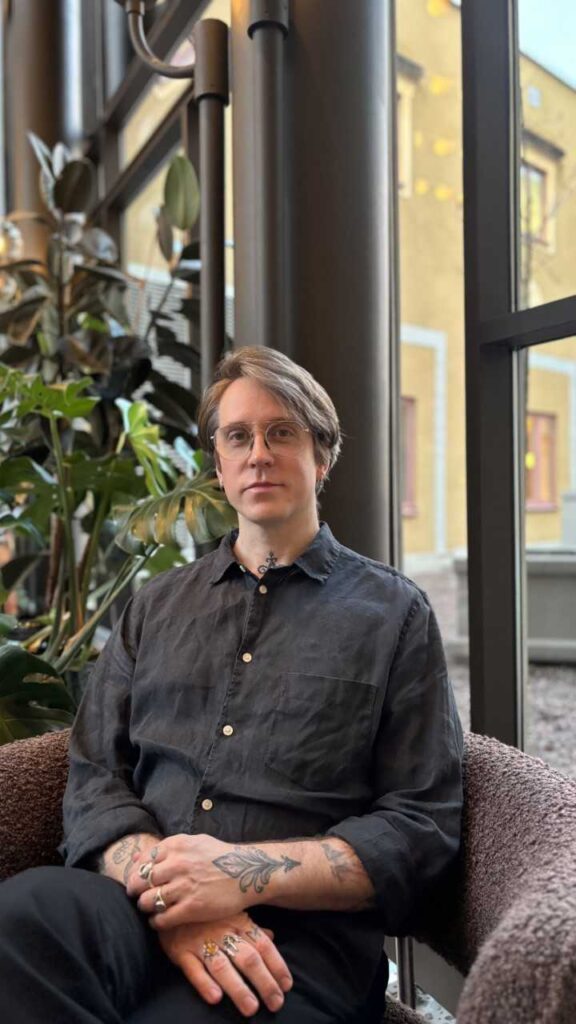
MA Niklas Barholm, Study of Religions, Åbo Akademi University (6 months)
Niklas Barholm is a PhD-student in the Study of Religions at Åbo Akademi University. In his PhD-dissertation he explores the attitudes towards spirituality within the transhumanist scene. Because of the decentralized nature of the transhumanist movement the dissertation also has the further purpose of creating clearer boundaries around the movement through the concept “scene”. With the help of this concept there is an opportunity to capture how discourses surrounding spirituality are shaped. Transhumanism as a phenomenon contains parts where the view on spirituality is inconsistent. The concept of spirituality is defined through an emic perspective and the meaning that the adherents themselves put on the concept.
The concept of scene constitutes of scenic structure and- construction. The scenic structure is studied through netnography, and an exploration of digital channels, and participant observation at, for instance, transhumanist conferences. The scenic construction is studied through transhumanist literature (2000-2025) by key individuals within the movement, as well as semi-structured interviews. The purpose of the interviews is to see if correlating discourses within the literature are reproduced among the movement’s adherents. Because of the dominating presence of key individuals there is a research gap to be filled when focusing on the grassroots of the movement.
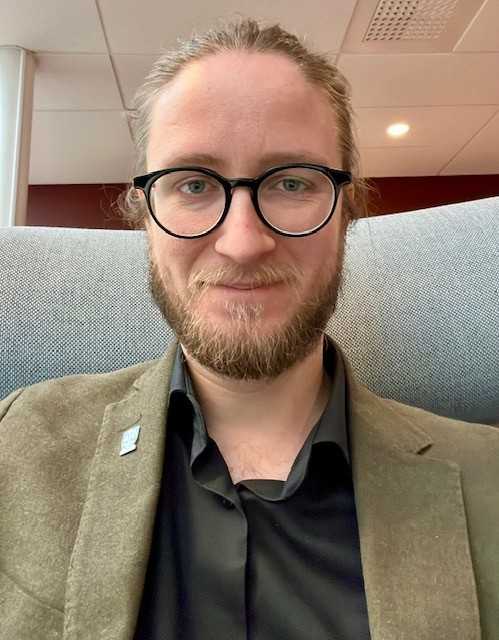
MT Fredrik Davidsson, Study of Religions, Åbo Akademi University (12 months)
Fredrik Davidsson is a doctoral student in the Study of Religions at Åbo Akademi University. His doctoral project focuses on how religion is interpreted, discussed and experienced by users who interact with a fictional transmedial world. A transmedial world consists of multiple media, for example video games, movies, books, short stories and comic books, which combined create a world where the users can immerse themselves in numerous ways. These transmedial worlds are often inspired by religious traditions outside of the fictional world for the creation of its ontology. The interpretations of these religious traditions continue in online forums and comments, which create further transmedial dimensions.
Davidsson’s doctoral dissertation is grounded in textual analysis and reception studies inspired by the analytical framework “networked reception” by Susana Tosca and Lisbeth Klastrup. The project is studying the twenty-year-old Warcraft universe, which is most well-known through the online game World of Warcraft. Through virtual ethnography, analysis of comments and interviews, the experiences of religion within transmedial worlds are studied and how it can contribute to the experience of religion outside of the fictional world. The project studies how the construction of transmedial worlds can inspire users’ understanding of religion in a contemporary context.
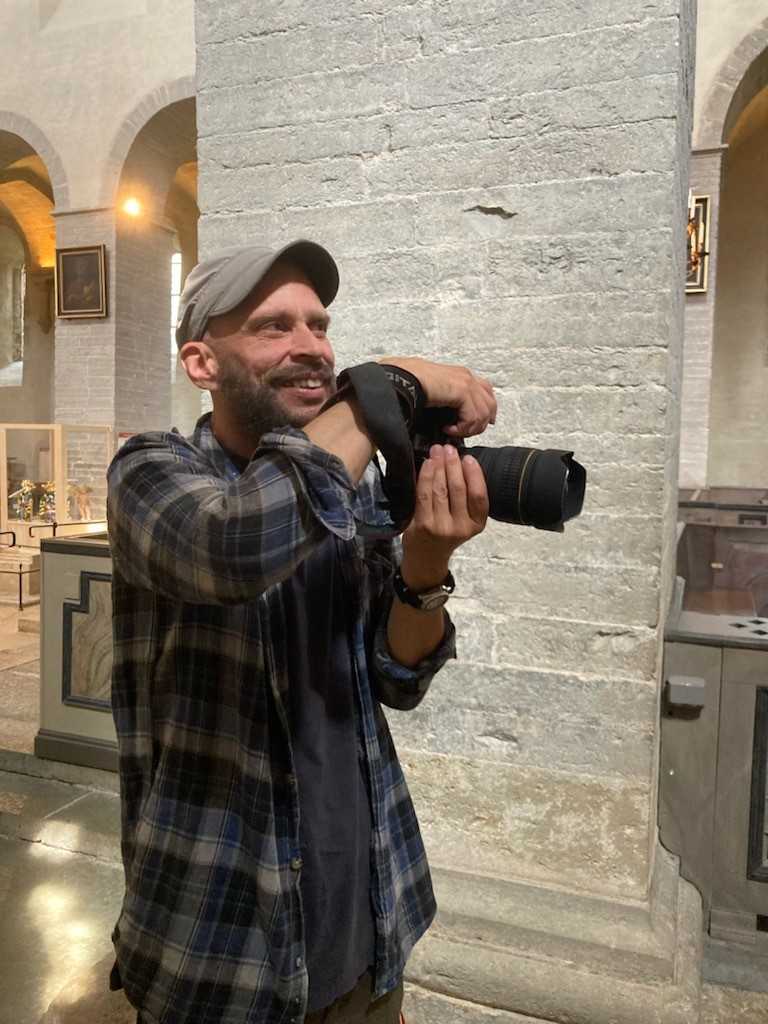
MA Viktor Lindbäck, Study of Religions, Åbo Akademi University (6 months)
The aim of Lindbäck’s research project, “Little Blue Devils” − Stories of Physical Contacts with UFO Beings from a Discourse Analytical Perspective, is to explore from a constructionist and discourse analytical perspective stories of physical UFO contact cases; human encounters with intelligent beings that are attributed to extraterrestrial, interdimensional or other non-human origin, and which the contactees themselves claim to have left tangible physical traces behind in the form of, for example, unexplainable injuries, illnesses or spontaneous recoveries from previous illnesses.
The research project examines how themes and narrative structures in the contactees’ stories have changed over time and relative to contemporary overarching discourses, popular culture, channels of communication and technology. Through discourse analysis of how, where and through which channels alleged physical UFO contact cases in Sweden and Swedish-speaking Finland since the 1940s and up to present date have been communicated, the goal is to generate a comparative material that can contribute to new interpretations and theories about religious, mystical and paranormal experiences in both the past and the present – which are not only applicable in the field of religious studies, but also, for example, in folkloristics and psychology.
UFO/UAP is a current topic, where dissemination of the research results to the society at large can contribute to a wider and more multifaceted human and individual-centred perspective on current discourses about the origins, meaning and impact of the phenomena. The research project, which is based upon personal experiences and narratives, also contributes to illuminating narrative representations of UFO experiences as an individual response to overall societal and technological changes, military, political and environmental threats, as well as relative to conspiracy theories and misleading information in the field of UFO/UAP.

MA Mila Santala, Folklore, University of Turku (12 months)
Mila Santala is a folklorist whose doctoral dissertation examines the esoteric spirituality, gendered agency, and cultural legacy of Elsa Heporauta (1883–1960). Heporauta, known as an author and for founding the Kalevala Women’s Association and Kalevala Jewelry, played a significant role in Finnish culture, yet the spiritual dimension of her work has remained unexplored. The research combines approaches from folkloristics, the study of religion, and cultural history to explore how Heporauta’s esoteric Christian worldview developed and shaped her work in early twentieth century Finland.
Drawing on correspondence, autobiographical manuscripts, and personal notebooks, the research analyses how Heporauta narrated her spiritual calling and how individuals turned to her for guidance and shared seeking. The research approaches these materials through lived esotericism, gender studies, and narrative analysis, examining how Heporauta exercised relational, care‑based spiritual authority outside formal esoteric movements and how such authority was negotiated.
The research shows how esoteric ideas circulated through personal networks and women’s cultural work, and how these interactions contributed to understandings of Finnishness and cultural heritage. Highlighting this overlooked aspect of Finnish cultural history, the research offers new perspectives on the spiritual background of Kalevala‑inspired heritage and broadens discussions on religion, gender, and esotericism in Finland.
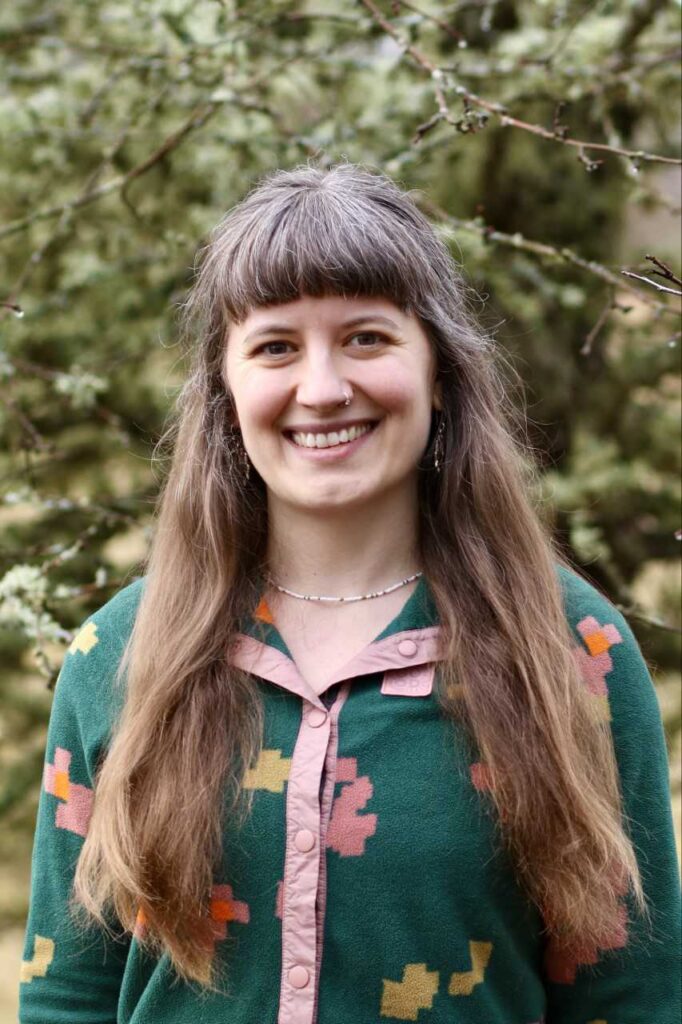
MA Linda Schleier, Gender Studies, Åbo Akademi University (6 months)
Linda Schleier is a doctoral researcher in Gender Studies at Åbo Akademi University and a yoga teacher. Her PhD project, “Embodied Resistance to the Coloniality of Trauma: A Decolonial Phenomenological Study of Trauma-Sensitive Yoga with Women on the Move,” examines how women survivors of war, displacement, and gender-based violence experience trauma-sensitive yoga in humanitarian contexts.
Schleier’s research conceptualises trauma as an embodied, relational, and spiritual phenomenon, and critically engages with dominant Western psychological trauma frameworks and their colonial epistemic legacies. By bringing critical and decolonial phenomenology into dialogue with trauma studies, religious studies, and critical yoga scholarship, Schleier investigates how trauma-sensitive yoga is employed as a therapeutic practice and whether it functions as a form of resistance to, or reproduction of, the coloniality of trauma.
Drawing on ethnographic fieldwork, interviews, and autoethnographic reflection across projects in Germany and Greece, the project explores how women on the move experience and interpret trauma-sensitive yoga in relation to their own cultural and religious understandings of the body, healing, and spirituality. It further examines how yoga itself, rooted in South Asian religious and philosophical traditions but often reframed as a secular therapeutic tool in humanitarian settings, raises questions of cultural appropriation and spiritual extraction.

MA Nina Shpakouskaya, Nordic Folklore Studies, Åbo Akademi University (12 months)
Nina Shpakouskaya is a doctoral student in Nordic Folkloristics at Åbo Akademi University. In her thesis, she examines how vampires – bloodthirsty undead figures that exist between life and death, between humans and monsters – transgress and challenge boundaries in contemporary children’s and young adult literature, theatre and film. The study focuses on transitions within the life course – such as those between childhood and adolescence, youth and adulthood, and life and death. The project places particular emphasis on how encounters with death are represented in texts aimed at younger audiences. The study demonstrates how vampire figures function as metaphorical tools that enable children and young people to handle fears and explore their identities in relation to existential questions such as the meaning of life and death, eternal youth and maturity.
The thesis further explores how liminal spaces between the different phases of life enable a renegotiation of power and norms. Drawing on Bakhtin’s concept of the carnivalesque and Foucault’s view of power, the study analyses how temporary reversals of power subvert social hierarchies and blur the boundaries between the permitted and the forbidden. By analyzing the meanings conveyed by the eternally young, yet often lonely and vulnerable vampire figures in contemporary Nordic children’s and young adult literature, theatre, and film, the study seeks to expand our understanding of present-day notions of childhood, youth, maturity, and death.
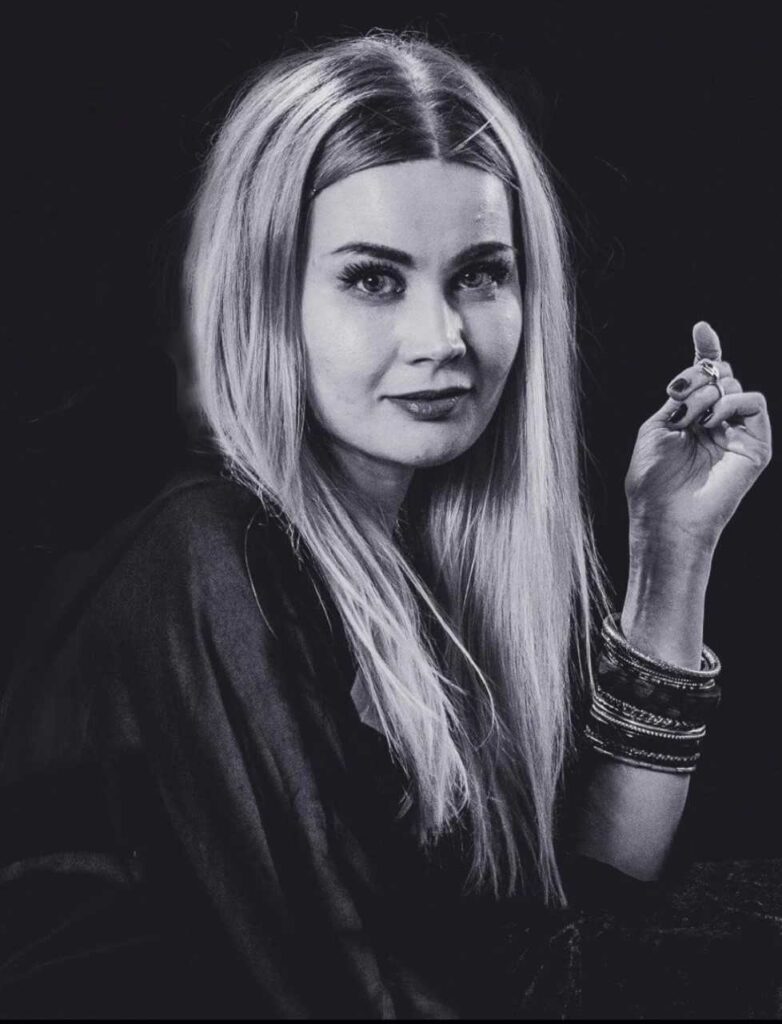
MA Sofia Silvén, Folklore, University of Turku (6 months)
In her doctoral dissertation Northern Light: Lucifer and the Lightbringer Myth in Finnish Modernity (1771–1924), Silvén examines how the so-called Lightbringer myth has functioned as a cultural and religious symbol in Finland during the breakthrough of modernity. The study focuses on how figures such as Lucifer and Prometheus are repeatedly activated in literature, press debates, and vernacular traditions to articulate criticism of established religious and social orders. The dissertation is grounded in folkloristics while operating within a broader interdisciplinary field that brings together the history of religions, cultural history, and the study of esotericism. The project adopts an intertextual theoretical perspective, understanding narratives as meaning-making in relation to earlier textual layers, particularly the biblical tradition in which Lucifer often appears as a negative counterfigure. By analysing how this figure is reinterpreted, inverted, or re-evaluated, the study offers new perspectives on narrative agency in Finnish modernity.
The dissertation consists of three sub-studies. The first examines the romanticised and theosophically influenced interpretation of Lucifer in the works of the poet Aarni Kouta. The second analyses the public debate surrounding the Prometheus Society and its role in discussions on church, society, and freedom of religion. The third sub-study focuses on folklore and printed sources connected to the so-called Turku Romanticism. Taken together, the project contributes new perspectives on the polyphonic and layered character of Finnish modernity and highlights the significance of esoteric thought and vernacular beliefs in Finland’s spiritual and cultural history.
Scholarships for research expenses
Fredrik Davidsson, Åbo Akademi University, for online research expenses, literature and software.
Zhvika Koleva, Uppsala University, for language editing of thesis manuscript.
Viktor Lindbäck, Åbo Akademi University, for field travels and field research.